Outside, a surface is judged by heat, glare, grip and dust long before anyone looks at its colour. Choose the finish first.
Indoors you choose a stone, then a finish. Outdoors the order reverses. Sun, dust, water and bare feet decide what the surface has to do, and only then does colour get a say.
The useful part is that one stone will do many jobs. The finishes are a design language, and most exterior problems are solved on the surface rather than by changing material.
Heat, and the colour of a floor
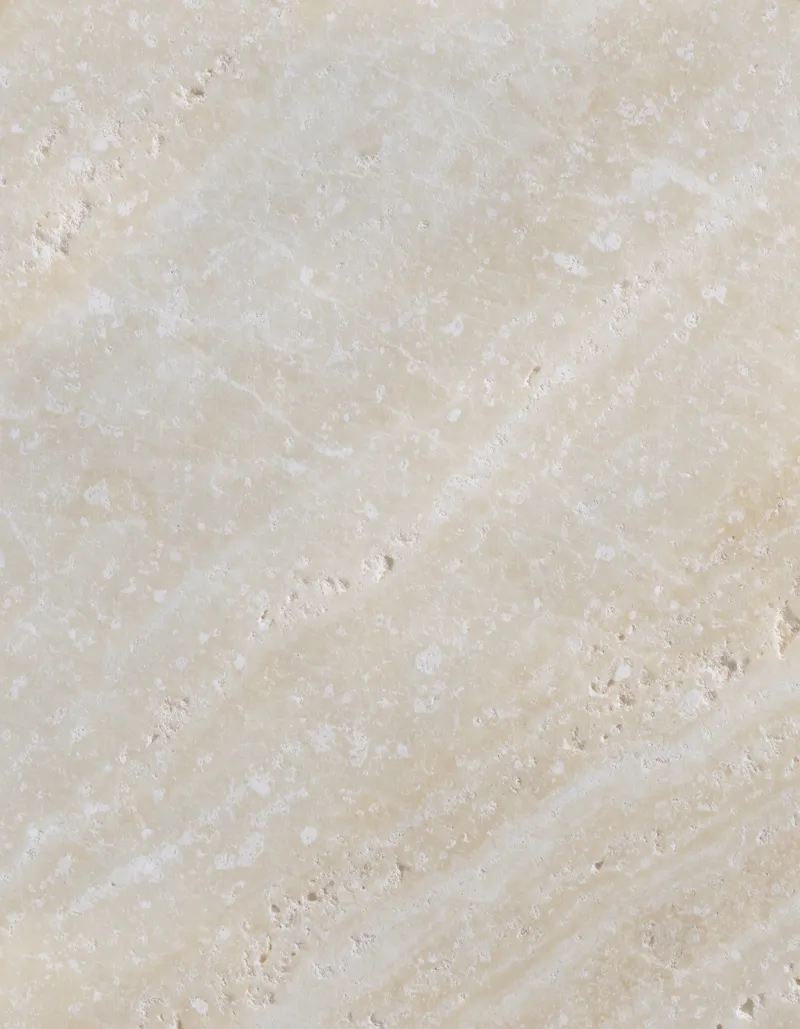
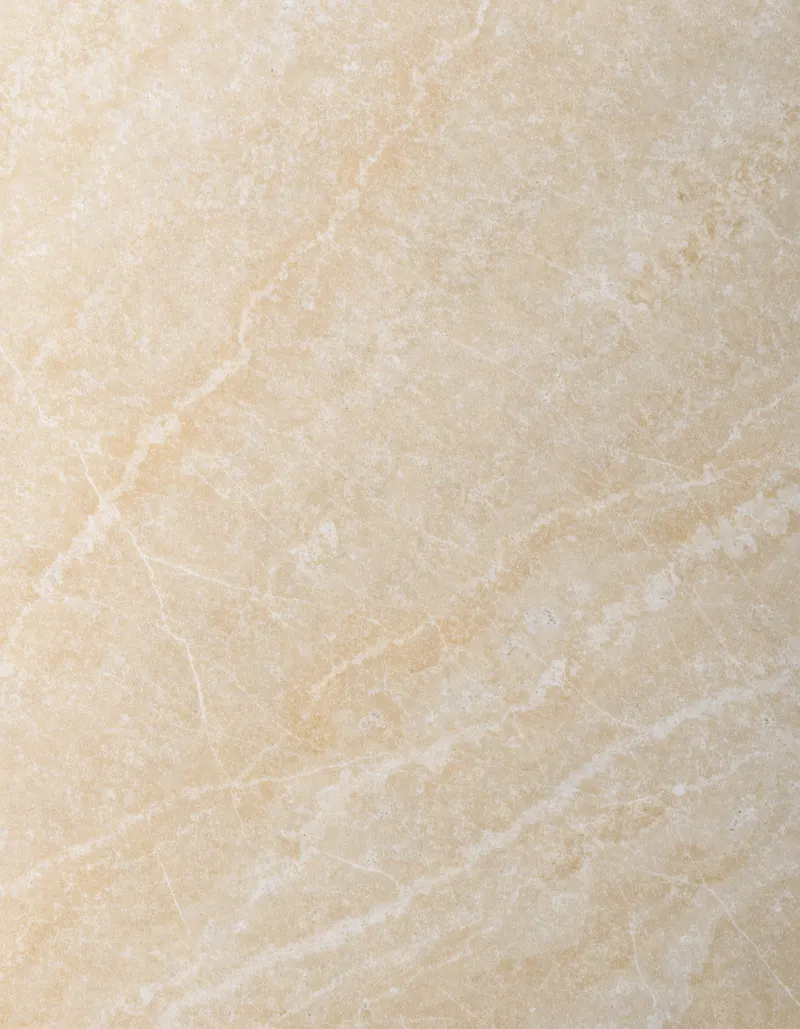
Dark stone in full sun gets hot. A polished black granite terrace is a beautiful photograph and an unusable floor in July. Light limestones such as Galala Classic and Golden Cream stay cooler underfoot, and they hold the warm tone that Egyptian light flatters.
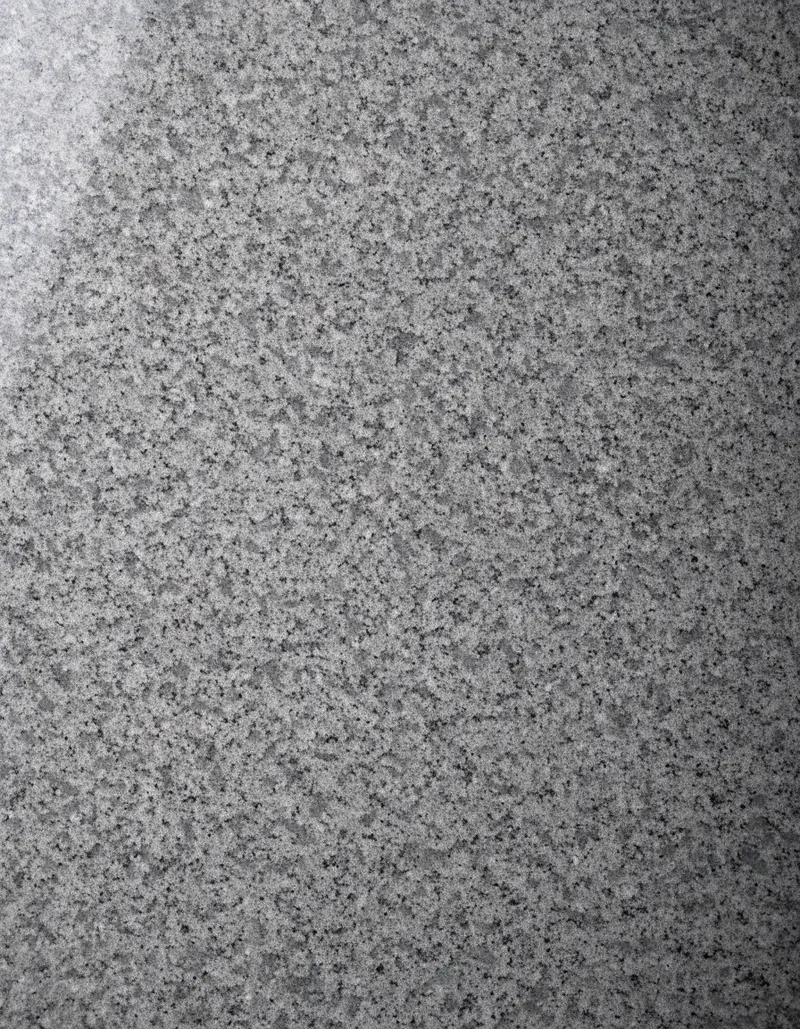
Keep dark granite for places where heat is not the question: cladding out of reach, kerbs, water features, a feature band set into a lighter field.
Glare is the other half of that decision
A pale polished floor in an open courtyard is a mirror. Honed, sandblasted and brushed faces diffuse the same light instead of throwing it back. If a light stone has to go where the sun stands overhead most of the day, take the shine off it.

Grip, when the floor is wet
Around pools, showers, ramps and entrances the finish is a safety decision.
- Flamed granite: heat broken, coarse, dependable underfoot.
- Bush hammered: a pitted texture that keeps its grip and reads as solid.
- Sandblasted: an even, fine matte. Quieter than the two above.
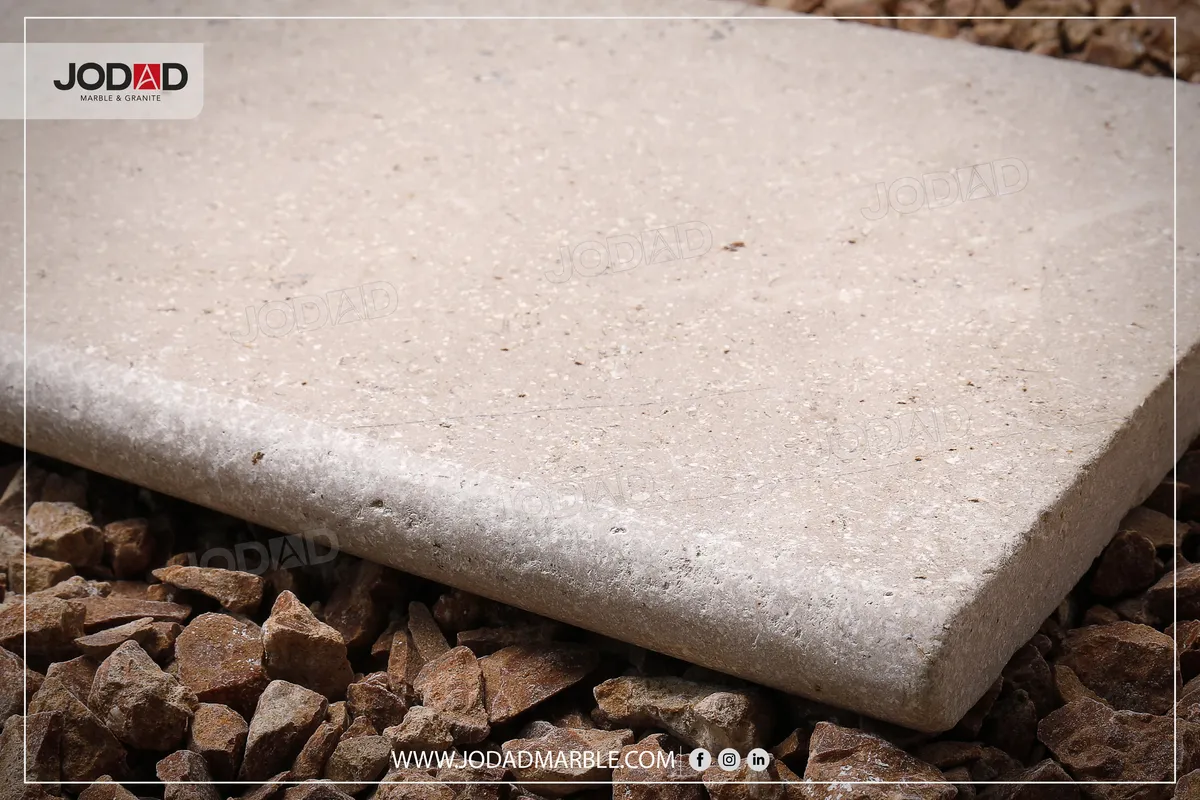
- Tumbled: softened edges and a worn face, grip with an informal, aged look.
Polished belongs indoors, or in dry shaded corners where nobody arrives with wet feet.
Match the depth of a texture to the reach of a hand
Dust is a fact here. Deep texture holds it, and held dust reads differently at different heights: on a driveway or a courtyard it is patina, on a wall at eye level or a handrail it is dirt.
So work in layers. Rough underfoot, quieter at hand height, and the smoothest faces where people touch, lean and sit.
Edges do more work than faces
Outside, the edge takes the abuse. Bullnose profiles round off treads and pool coping so nothing chips or cuts a foot. Chiseled and stripped faces run grooves across a ramp where grip matters more than smoothness.
Put the edge profile on the drawing. It is the detail most often left to chance, and the first one to fail.
Water, salt and the coast
Splash zones and Red Sea projects are harsher than they look. Granite takes constant wetting and salt better than the softer limestones, so use it where water sits and the stone is worked hardest: coping, thresholds, fountain surrounds, steps into water. Keep limestone where drainage is real and water moves on.
What heat actually does to a floor
Surface temperature is not a matter of taste. A dark stone in direct Egyptian sun can reach a temperature that makes a terrace unusable barefoot in the middle of the day, while a pale limestone a metre away stays walkable. Colour is the biggest lever, texture the second: a broken surface presents less flat area to the sun and to the foot at once.
This is why the sequence matters. Choose the colour for the heat the surface will take, then the finish for grip and glare, and only then ask whether you like it. Reverse that order and you get a photograph rather than a floor.
Salt, and why the coast is harsher than it looks
Red Sea and coastal projects are the hardest exterior brief in Egypt. Salt does not merely sit on a surface, it moves into the pore structure, crystallises as water evaporates, and pushes outward from inside the stone. Softer, more porous stones feel that first, at the edges and around fixings.
Granite is the honest answer wherever water sits and stays: coping, thresholds, fountain surrounds, steps into water, splash zones. Limestone belongs where drainage is real and water moves on within minutes. Where the two meet, put the granite at the wet edge and let the limestone start where the surface dries.
Dust, and the maintenance you are signing up for
Texture and dust are the same decision seen twice. A deep bush hammered or chiseled face holds dust in its low points, and that reading changes with height: on a courtyard floor it looks like age, on a wall at eye level it looks like neglect, and on a handrail it feels like grit.
Match depth to reach and the building cleans itself in the eye of the person using it. Ignore that and you have specified a cleaning contract.
| Surface | Finish | Edge |
|---|---|---|
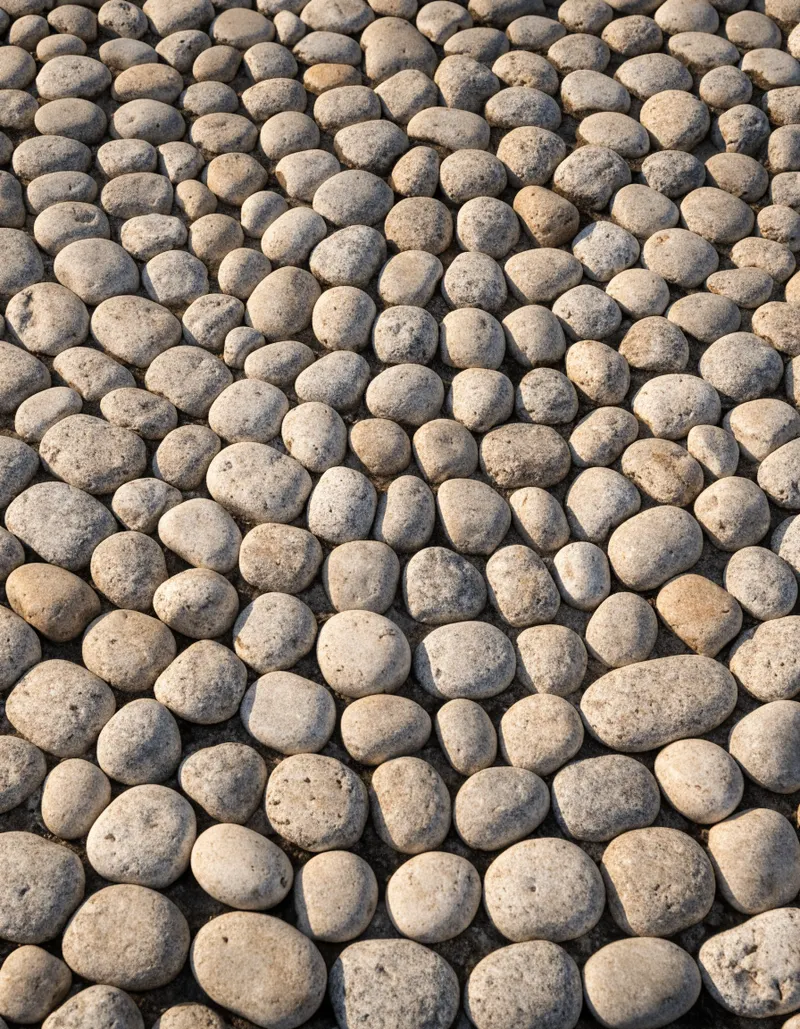
| Driveway | Cobbles, or flamed granite | Square |
| Pool deck | Sandblasted or bush hammered light limestone | Bullnose coping |
| Courtyard paving | Tumbled, or acid washed and tumbled limestone | Square or tumbled |
| Façade cladding | Honed, brushed or sandblasted | Chamfer at reveals |
| Steps | Flamed or chiseled tread | Bullnose nose |
| Feature wall in shade | Polished, where the vein has earned it | Square |
A pattern to start from
- Driveway: cobbles, or flamed granite
- Pool deck: sandblasted or bush hammered light limestone, bullnose coping
- Courtyard paving: tumbled, or acid washed and tumbled limestone
- Façade cladding: honed, brushed or sandblasted
- Steps: flamed or chiseled tread, bullnose nose
- Feature wall in shade: polished, where the vein has earned it
Then bring the stone back into the conversation. Ask for samples in the finishes you have chosen, look at them wet, and look at them outdoors. A sample under workshop light is a different material from the same sample in the sun.