Ancient Egypt reserved the red granite of Aswan for obelisks and sanctuaries. It is still quarried there, and still chosen for one reason: it does not move.
Some stones carry a place name because that is where they are found. Red Aswan carries one because that is where its history is.
A quarry that has been working for millennia
The granite belt around Aswan has been quarried since the Old Kingdom. Obelisks, colossal statues, sarcophagi, shrine elements and temple thresholds were cut from this rock, dressed close to the quarry, and floated down the Nile.
The most famous piece never left. The Unfinished Obelisk still lies in the northern quarry, cracked and abandoned mid cut, the working marks of its quarrymen across it. It is the clearest surviving lesson in how hard stone was read, split and abandoned long before steel and diamond.
What the stone actually is
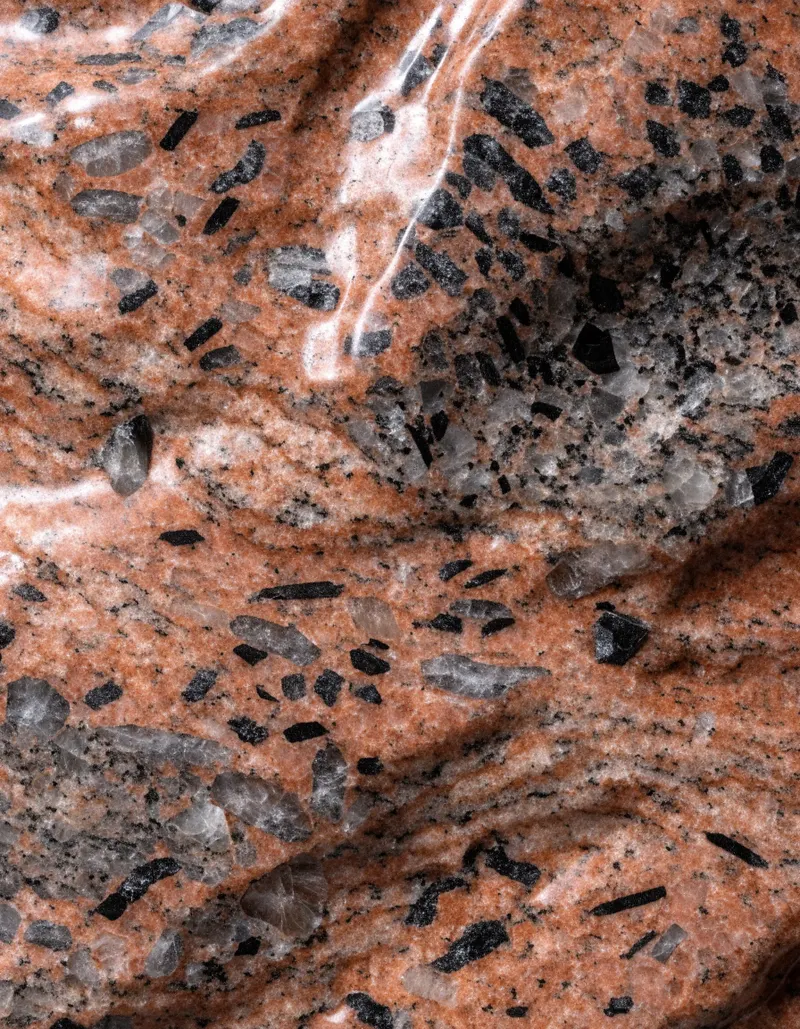
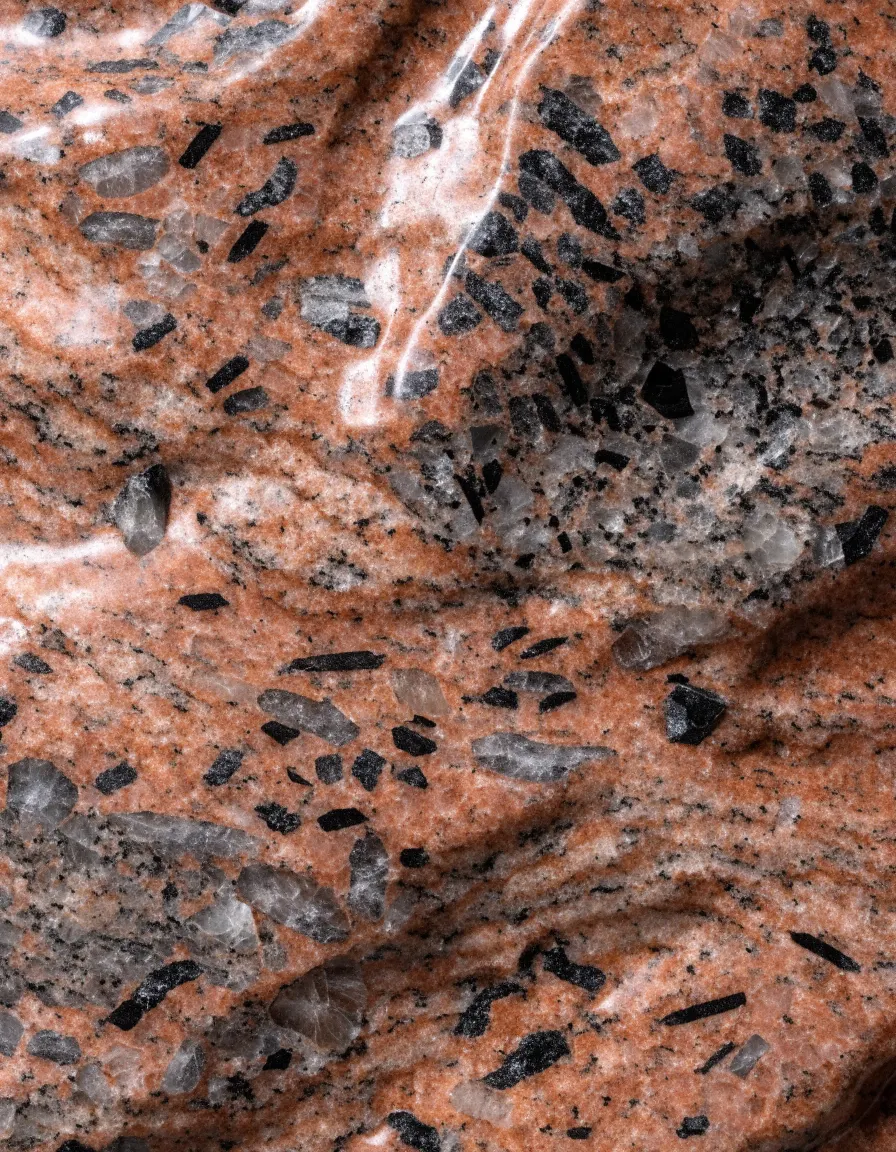
Red Aswan is a coarse grained granite. The crystals are large enough to read one by one: pink to brick red feldspar, translucent grey quartz, and dark flecks of mica and other dark minerals.
That coarse structure is why the stone reads warm from across a courtyard and busy from arm's length. It is also part of why it lasts. Surfaces of this granite cut in antiquity are still legible after thousands of years of sun, sand and flood.
Read the colour before you specify it
Aswan granite is a family, not a swatch. Colour runs from salmon to deep brick, and the balance of dark minerals changes from bench to bench. Two things follow.
First, the finish changes the colour more than most buyers expect. Polishing deepens the red and makes the quartz glassy. Flaming lifts the face to a lighter, dustier, greyer pink, because heat breaks the crystals at the surface. Bush hammering does something similar by force. Approve a polished sample, then specify flamed for the same elevation, and you have specified a different colour.
Second, if a façade or a floor has to read as one field, ask for one batch, and for it to be dry laid and inspected before packing.
Where it belongs today
- Cladding and floors that take heavy traffic
- Treads, kerbs, thresholds, wet edges and fountains
- Monuments, memorials, lettering, bases and plinths
- Counters and reception faces that want a warm dark stone
Formats follow the job: blocks for factories, slabs for workshops, cut to size when the value is on site. If you are choosing between them, start with how the three formats differ.
How it behaves under tools
Hard stone is slow stone. Red Aswan is dense and coarse crystalled, which is what makes it last and also what makes it expensive to work: it saws slower than limestone, it takes more diamond, and every profile cut into it costs more time than the same profile in a soft cream.
Two consequences follow for a drawing. Keep profiles simple where you can — a bullnose or a chamfer on granite is routine, an ornate moulding is a different order of work. And decide edges early, because reworking a finished granite edge on site is not a small correction.
The compensation is that it holds what it is given. An arris cut in this stone stays sharp, lettering stays legible, and a polished face keeps its reflection through decades of cleaning that would dull a softer surface.
How to specify it
- Write the full name, Red Aswan, not "Aswan granite".
- Name the finish per element, and approve a sample in that finish rather than a polished stand-in.
- Ask for one batch if an elevation or a floor has to read as one field, and for dry-lay inspection before packing.
- Put the edge profile on the drawing, including the nose of every tread.
- Confirm the format — block, slab or cut to size — before pricing, because it changes who carries the sawing risk.
Keep the Aswan names straight
Several Egyptian stones carry the same city, and the confusion costs real money.
| Name | Colour | Crystal | Reads as |
|---|---|---|---|
| Red Aswan | Pink to deep brick red | Coarse | Warm and busy at close range |
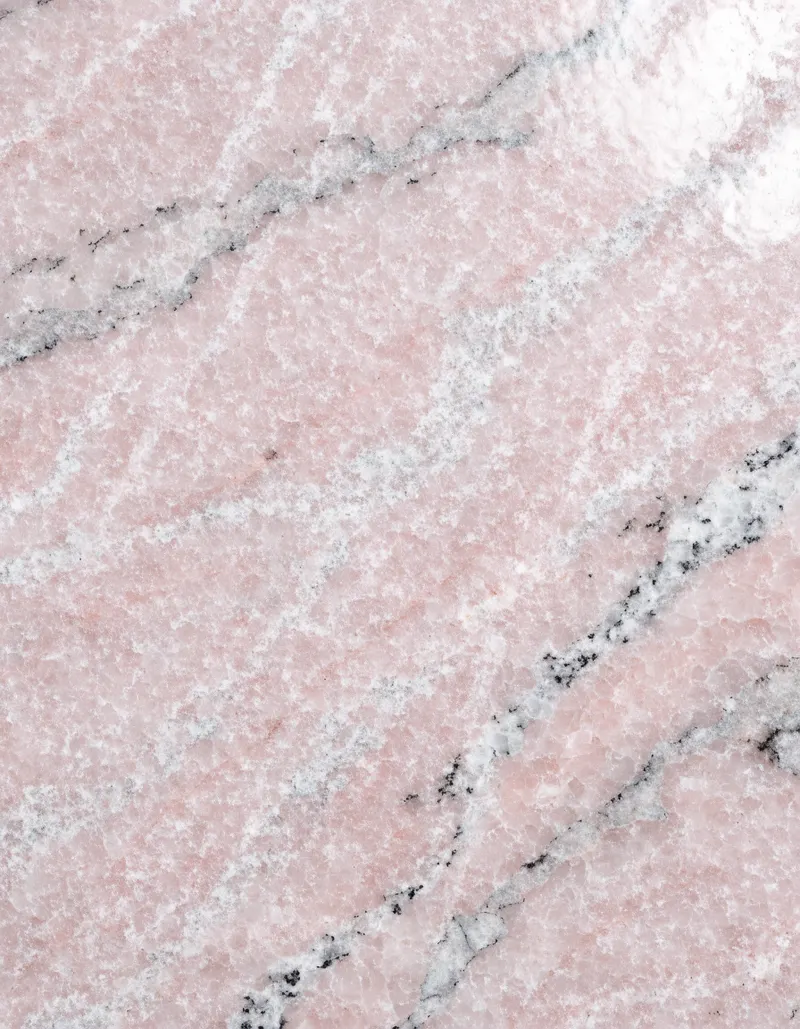
| Rosa Aswan (also sold as Rosa Sinai) | Pink, lighter | Finer | Bright, with a crystalline sparkle |
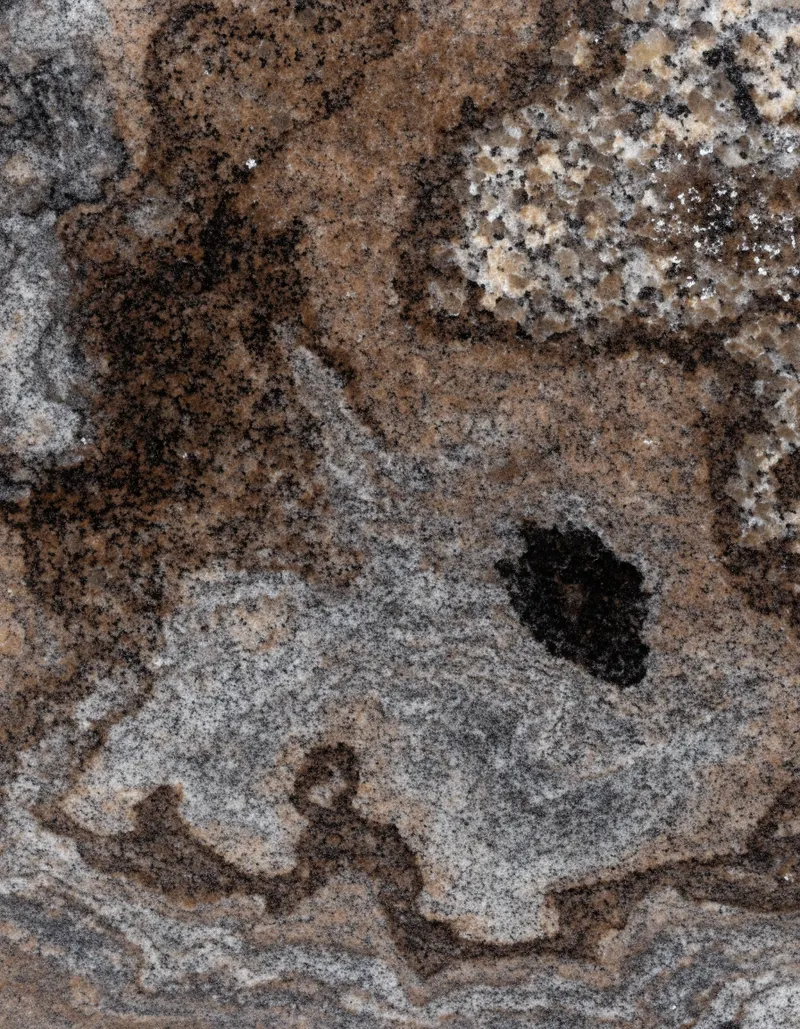
| Gandonna Aswan | Warm, mottled | Coarse | High contrast, patchy rather than even |
| Nero Aswan | Deep black | Fine and even | A solid field at any distance |
Specify by full name, and confirm against a sample from the actual batch. "Aswan granite" on its own is not a specification.
The reason to choose this stone today is the reason it was chosen for obelisks. It is hard, it is dense, it takes an edge, and it does not move.